
You are probably asking because you have a decision in front of you. A job offer, a visa application, a partner from here, or just years of thinking about it and finally running the numbers (if you have not yet, our complete guide to moving to New Zealand covers the practical side). The question of whether New Zealand is a good place to live is not answered by tourism brochures and you know that. What you want is the version that includes the grocery bill, the housing quality, the healthcare wait times and what it actually feels like three years in when the novelty has settled. That is what this article tries to give you.
Is New Zealand a good place to live? For the right person, yes. But that assessment requires naming both what works and what does not and a few things that surprise almost everyone who moves here.
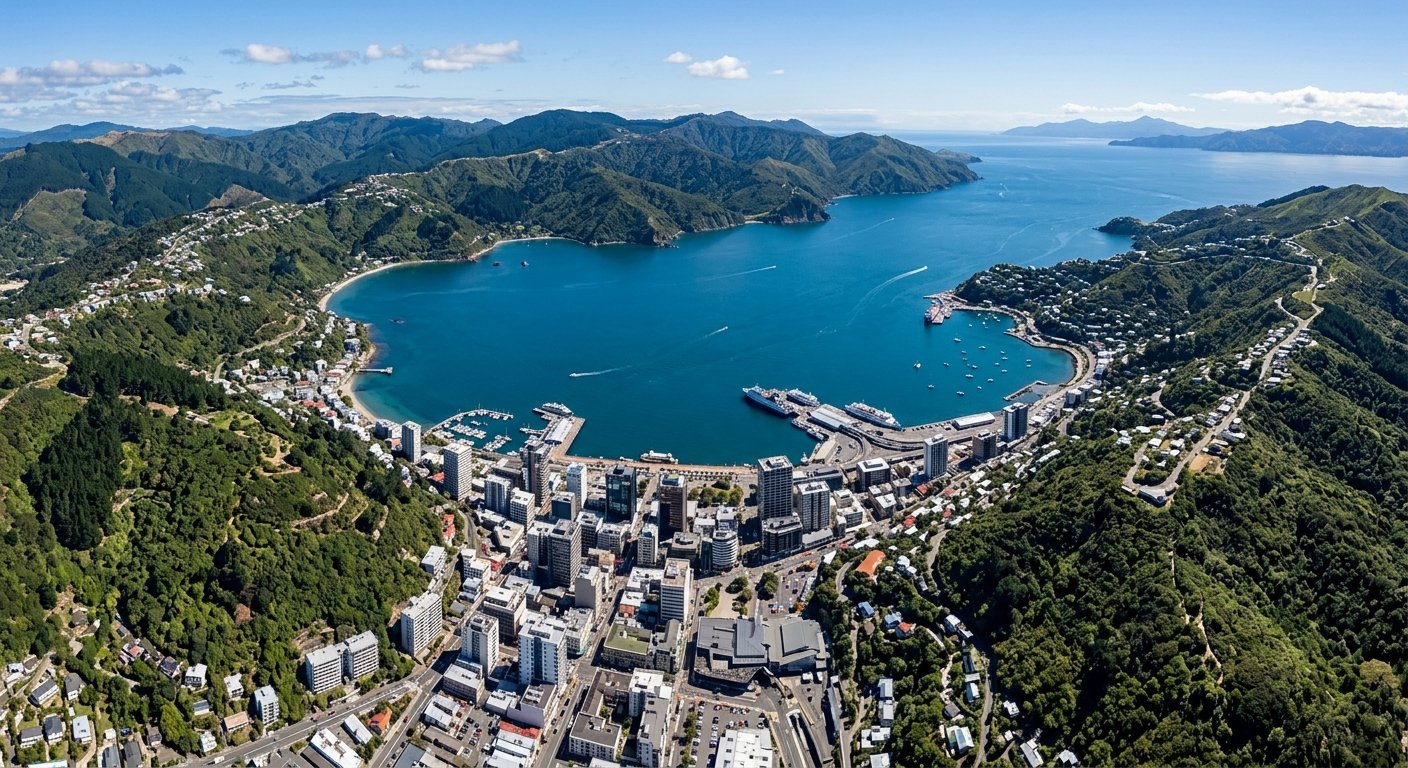
What New Zealand actually gets right
Start with safety, because it matters more than people expect until they have it. New Zealand ranked third globally on the Global Peace Index 2025, the most peaceful country in the Asia-Pacific region. New Zealand Police’s general policing model is unarmed — officers do not routinely carry firearms on their person. Violent crime is a more mixed picture than the peace ranking suggests: New Zealand’s intentional homicide rate (1.46 per 100,000, per UNODC data) sits well below Canada’s (1.98) and far below the United States’ (5.76), but is actually higher than Australia’s (0.85) and the United Kingdom’s (1.15) on this specific measure — so “safer than everywhere comparable” overstates it, even though the overall peace and stability picture is genuinely strong. Expat accounts consistently name safety as the thing they value most — not at the time of moving, but two or three years later, once it has become background reality rather than novelty. Parents describe children walking to school alone as normal here in a way it stopped being normal in many UK or Australian cities years ago.
Work-life balance is the other consistent standout. New Zealand ranked first globally on the Global Life-Work Balance Index 2025 for the third consecutive year, around five points clear of second-place Ireland (86.59 to 81.17). Statutory entitlements are part of this: four weeks of paid annual leave (and it’s not uncommon to get five), 11 national public holidays plus your own region’s anniversary day (12 in total) and up to 26 weeks of government-funded paid parental leave. But the culture matters as much as the legislation. Workplaces are flatter here. First-name basis with senior managers is the norm rather than the exception. The expectation that you will answer emails at ten at night is less common than in the UK, Australia, or the United States – actually it’s the opposite, the expectation in many places is that you won’t work outside of business hours because that will burn you out and make you less effective during the day.
The natural environment is not marketing copy — it is structurally different from most countries. You are never more than 130 kilometres from the coast. Around a third of the country’s total land area is protected conservation estate managed by the Department of Conservation. Mountains, coast and bush are accessible from any of the main cities within an hour or two by car. If outdoor access matters to your quality of life, New Zealand delivers it consistently. Having grown up here, I cannot imagine living in a country where I am positioned so far from the ocean; it’s part of our identity and something important to us.
The tax structure also suits certain migrants. At present there is no general capital gains tax, no inheritance or estate tax, no wealth tax and no US or UK-style compulsory social-security payroll levy (though it is a regular topic of debate at elections). New migrants get a four-year transitional resident exemption from tax on most foreign income. These are structural advantages that compound over time, particularly for people with overseas assets or income streams.
Where the picture gets complicated
Housing: quality and cost are separate problems
Housing is the most complex topic in this assessment because it has two distinct problems that are often run together and should not be.
The cost problem is the easier of the two to quantify. The national median home value was NZD $775,000, with Auckland at NZD $1.005 million, per REINZ’s House Price Index for May 2026. By interest.co.nz’s house price-to-income tracker, the national ratio stood at 6.4 times median household income in May 2026 — housing affordability researchers such as Demographia treat anything above 5.1 as “severely unaffordable”; New Zealand sits well inside that band. Renting is cheaper than buying but still substantial: the median weekly rent for new tenancies was NZD $625 in April 2026 according to Trade Me’s Rental Price Index, with Auckland three-bedroom properties typically ranging from NZD $678 to $790 per week (same source). Statistics New Zealand’s most recent data found that 57.7% of lower-income renting households spend at least 40% of their disposable income on housing.
The quality problem is less well-known to people considering moving here and it surprises almost every UK and European migrant. A significant portion of New Zealand’s housing stock — particularly pre-2004 rentals — is cold, damp, poorly insulated and in some cases structurally affected by what became known as the leaky homes crisis: a period from roughly 1988 to 2004 when construction practices resulted in homes that were not fully weathertight, causing timber decay and mould. A 2015 BRANZ House Condition Survey found 40% of New Zealand homes had visible mould, worse in rentals (31% damp) than owner-occupied homes (11% damp). The same survey found that around one-fifth of homes with an accessible subfloor had inadequate or no underfloor insulation — roughly 290,000 dwellings nationally. Winter indoor temperatures in unheated living areas commonly fall well below the World Health Organisation’s recommended minimum indoor temperature of 18 degrees, according to He Kāinga Oranga / University of Otago housing research.
New Zealand’s building code insulation requirements are, in several respects such as floor and glazing standards, lower than Australia’s and the UK’s — a gap widely discussed in the building industry, though there is no single government document that runs the three codes side by side. Even a home built to code can feel cold by those standards. New builds have improved significantly, but new builds are a minority of the rental market.
There is a Healthy Homes Standard that all private rentals had to fully comply with from 1 July 2025, which has made a significant difference, depending on where you choose to nest this will matter more or less – in Auckland the temperature is more moderate whereas in Invercargill for example you can expect colder months where this matters more. It pays to do your research and check what kind of home you’re entering into. Check our article on renting for more details on this.
Groceries and daily costs: expensive in ways that surprise newcomers
New Zealand is not cheap — see our full cost of living in New Zealand guide for a city-by-city monthly budget. This is the misconception that causes the most post-arrival friction, particularly for people arriving from the UK who expect remote-and-agricultural to mean lower prices. Research published by Edith Cowan University in 2024, comparing a basket of 44 common grocery items across four countries, found New Zealand to be the most expensive of the four — more expensive than the UK, Ireland and Australia. The same basket that cost the AUD equivalent of $314–$329 in the UK cost $379–$454 in New Zealand, according to RNZ’s reporting on the study.
The structural reasons are straightforward: geographic isolation increases shipping costs for imported goods, the small population prevents the economies of scale that large markets take for granted and the supermarket sector is dominated by two major players (Woolworths New Zealand — which began rebranding from Countdown in 2023, completing the changeover in 2024 — and Foodstuffs), which limits competitive pressure on pricing. There is no Amazon operating in New Zealand. Ordering from overseas incurs high shipping costs and import duties. Global product launches routinely arrive months or years late and some products simply do not reach the market at all.
Utilities are a partial offset: according to Numbeo’s crowdsourced cost-of-living data, monthly electricity, water and rubbish costs for an 85-square-metre flat run around 52% cheaper in New Zealand than the UK. But the grocery gap is large enough to be felt weekly and on a salary that may already be 20–40% below what a comparable role would pay in Australia or the UK (see Salaries and the wage gap, below), the net position is often worse than people planned for.
Grocery prices for an average New Zealand household have risen substantially since 2020. The COVID period provided initial cover — supply-chain disruptions created cost pressure and the justification held. The problem is that the justifications became permanent fixtures while the disruptions did not. Prices rose and largely stayed risen. Grocery pricing has been an active political topic in New Zealand since the government commissioned a Commerce Commission market study into the retail grocery sector, which reported in March 2022 and found competition concerns significant enough that both major parties have since committed to further intervention. The cost increase is now felt by almost everyone.
The pricing of imported goods carries a related problem that has real precedent, just not always where people assume it. In Australia, a 2013 parliamentary IT Pricing Inquiry found that software and hardware from companies including Adobe and Microsoft was priced substantially higher there than in the United States, for products delivered identically over the internet — a pattern popularly nicknamed the “Australia Tax.” No equivalent New Zealand-specific inquiry has examined a comparable gap between New Zealand and Australia, so it would be wrong to claim one exists here. Apple is a cleaner New Zealand example, though the explanation is more mundane than distributor margin: a MacBook Air that lists for roughly USD $1,099 in the United States (before local sales tax, which is added at checkout there) lists for NZD $2,199 in New Zealand, where 15% GST is already included in the sticker price. Once New Zealand’s GST is stripped back out, the two prices land close to parity — so the apparent New Zealand premium on this product is mostly a tax-inclusive-versus-tax-exclusive pricing convention, not evidence that New Zealanders are being charged more for the same product once you account for how each country displays its price.
The broader point still stands regardless of any single retailer example: geography can and does affect price, but it does not explain all of the premium New Zealand consumers pay above equivalent US or UK prices on many imported goods — a meaningful share of it is distributor margin and the friction of a small, isolated retail market rather than freight cost alone.
Salaries and the wage gap
Immigration New Zealand’s median wage figure (used to set visa thresholds) reached NZD $35.00 per hour from March 2026 and Statistics New Zealand’s Labour Market Statistics (Income) put median weekly earnings at NZD $1,380 in the June 2025 quarter — roughly NZD $71,760 annualised. These are reasonable figures in isolation. In context, professional salaries are typically 20–40% below equivalent Australian rates (see the Hays Salary Guide comparison below for a concrete example). A software engineer earning NZD $100,000–$140,000 in Auckland typically finds an equivalent Sydney role advertised at a meaningfully higher figure once converted to NZD — the exact gap varies by role and employer — and once combined with Australia’s generally lower grocery prices, that produces a real purchasing-power disadvantage for New Zealand.
This is not a fringe observation. It is the primary driver of a net migration outflow that set records in 2024: 127,800 people left New Zealand in the twelve months to November 2024, a 28% increase and the highest on record. The median age of those leaving was 29. These are not young people on gap years — they are skilled adults making a considered economic calculation and roughly a third of all departures were to Australia. A survey conducted by recruitment firm Robert Walters in 2025 found that 67% of New Zealand workers were open to relocating, with 43% citing higher salaries as the primary motivation.
The Hays Salary Guide FY26/27 — which covers both Australia and New Zealand and is the most comprehensive cross-Tasman salary reference available — shows something notable in senior technology roles. For a Solution Architect, the guide’s Auckland typical salary is NZD $190,000; Sydney and Melbourne both show AUD $190,000. The same nominal figure, different currencies. For a Cloud Architect, the guide’s Auckland typical of NZD $210,000 nominally exceeds Melbourne’s AUD $190,000. Historically, NZ roles in these categories would have been NZD $130,000–$140,000 against an Australian AUD $190,000 — a 25–30% nominal discount. That gap has closed to near-parity in some senior tech specialisations, which is a significant change. The caveats matter: after converting currencies (NZD is typically worth somewhat less than AUD, though the exact rate moves) and accounting for Australia’s mandatory 12% superannuation guarantee on top of salary (New Zealand’s minimum KiwiSaver employer contribution is 3.5%), the true total remuneration package still favours Australia. But the direction of travel matters. Checking the Hays guide before accepting any offer in New Zealand — and re-reading it a few years in — is the most reliable way to know whether what you are being paid reflects the market.
Headline salary figures also obscure how pay growth works for people who stay with a single employer. The pattern in New Zealand — common in many markets, but acute here — is that organisations recruit at market rates while constraining increases for existing staff. In many cases this is explicit HR policy, with hard annual caps enforced on the basis that existing employees can be retained below market for longer than they can be recruited. The practical result: changing jobs is the primary mechanism for reaching market rates. Those who remain with an employer for several years frequently find themselves at a disadvantage, earning significantly below what a new hire into the same role would receive. The Hays Salary Guide is one of the few tools employees can use to benchmark their own compensation without involving their employer; the gap between guide rates and what long-term employees are actually paid is often substantial and in my own experience, material.
A related distortion that surprises many migrants — particularly those arriving from European or Latin American markets where pay tends to track training requirements more closely — is the relative pricing of trades versus knowledge roles. Industry rate-comparison sites put plumber and electrician call-out work in New Zealand at roughly NZD $80–$150 per hour plus a separate NZD $45–$200 call-out fee — there is no single official rate card for trades pricing, so treat this as a general range rather than a fixed number. Those roles require a proper apprenticeship and the work is skilled labour. What it does not require, for the most part, is the sustained ongoing upskilling that technology roles demand — where a practitioner who does not continuously update their knowledge becomes professionally outdated within three to five years. A senior solution architect or enterprise technology lead carries knowledge-intensity broadly comparable with law or medicine. The pay relationship does not reflect this and the gap is more pronounced in New Zealand than in most comparable economies. COVID amplified it significantly: construction and trades labour shortages drove call-out rates sharply higher through 2021–2023 and those rates have not retreated. The downstream effect is concrete: the high cost of trades labour feeds directly into the cost of building, maintaining and renovating housing — which feeds back into purchase prices and rents. It is one of the less-discussed structural inputs into the housing affordability problem and one that trips people up when they are trying to understand why running costs and renovation quotes feel so high relative to what they expected.
Healthcare: publicly funded but under pressure
New Zealand’s public healthcare system is free or subsidised for citizens and most permanent residents. Hospital care is free for eligible residents. GP visits are subsidised. Prescription charges are tiered — a $15 co-payment for most adults aged 18–64, reduced to $5 for Community Services Card or High Use Health Card holders and free for under-14s and over-65s. For acute care and serious illness, the system works.
The gap between the official description and the ground-level experience lies in access and waiting times. New Zealand is around 485 GPs short of what the population needs now, with that shortfall projected to reach somewhere between 753 and 1,043 within ten years. The country has 74 GPs per 100,000 people, compared with 116 in Australia and 122 in Canada. A Victoria University of Wellington study found 36% of general practices were not taking new enrolments in 2024 — meaning that if you move to a new area, you may not be able to register with a GP at all without being placed on a waiting list. Over 74,000 people were waiting more than four months for a first specialist assessment at the start of 2025.
Many residents who can afford it purchase private health insurance — NZD $120–$250 per month for an individual in their 40s on a mid-range plan, rising to NZD $240–$500 for a couple and considerably more for those in their 50s — primarily to access faster specialist referrals and elective procedures. See our full article on healthcare in New Zealand for a detailed cost breakdown, including what private insurance actually covers and when it is and is not worth buying.
The things that take longer to notice
Geographic isolation: the slow-burn adjustment
New Zealand is a long way from everywhere else. A one-way flight to London typically takes around 24 hours including a stopover; New York is roughly 17 hours. Return economy flights to Europe commonly run NZD $2,500–$5,000 depending on season and route. The time zone difference from GMT is 12–13 hours depending on the season, which makes real-time communication with family in the UK or Europe difficult for the long term.
Most people who move here describe the isolation in similar terms: it is not the thing that hits you first. The first six to twelve months are absorbing — new job, new neighbourhood, the beauty of the place, the novelty of it all. It is around the 12–18 month mark that the distance becomes visceral rather than abstract. A family event you cannot afford to fly home for. A parent’s illness handled at a remove of thirteen time zones. The accumulation of flights you did not take because the cost was too high. This pattern appears consistently enough in expat accounts to treat it as a predictable stage of the adjustment, not an individual sensitivity.
Knowing this and having wanted to leave NZ for more than two decades (I stayed for family reasons), I myself now worry about the distance from my parents at the other end of the scale, whom are increasingly reluctant to travel – even if I know they would not wish me to consider that. The distance is expensive and something important to consider. (I said this wasn’t going to be a sales brochure didn’t I).
Making friends: the distinction between warmth and depth
Kiwi surface friendliness is easy to find. People are generally warm to newcomers, easy to talk to at a barbecue and not standoffish in the way some cultures can be. What takes longer to understand is that this warmth does not translate quickly into close friendship. New Zealand is a country where most adults’ close social circles were formed at school or through childhood neighbourhoods. As an adult newcomer without that shared history, entering an established circle is slow work. Community reports from people who have lived here for two years or more consistently note a difference between being liked and being integrated.
This is even a problem for native born New Zealanders especially if moving cities. The traffic in Auckland for example means that people tend to focus on getting home in time to complete other chores or spend time with their own families and this is made worse now that office socialisation has reduced significantly as a result of the excellent working from home NZ culture. The typical timeline described is one to two years before a social network begins to form, but for some it may be longer.
This is not a criticism of New Zealanders — it is a structural reality of any country where primary social bonds are childhood-formed. But it means the first twelve to eighteen months can feel socially isolated despite people being objectively friendly to you day-to-day. Go in expecting that gap. My advice, when you’ve been around for 6 months at work or more, reach out to a colleague and invite them for dinner or for a beer, I for one would be extremely humbled by that and would want to return the favour if not at least be closer to you at work.
Natural hazard risk
New Zealand sits on the Pacific Ring of Fire and experiences more than 20,000 located earthquakes a year, of which around 100–150 are felt. However in Auckland I have felt exactly two earthquakes since 1974 and neither was anything to talk about whereas in Wellington it’s a course of business on a bi-weekly basis. Depending on where you live this may or may not be something to consider. However, the 2011 Christchurch earthquake killed 185 people and Treasury’s estimate of the total rebuild cost was NZD $40 billion. Wellington is known to sit on a major fault line. Cyclone Gabrielle in 2023 caused NZD $14.5 billion in damage across the North Island — according to a 2024 academic analysis (Wilson et al., Public Health Communication Centre), the costliest tropical cyclone on record in the Southern Hemisphere. These are not remote historical events — they are part of the ongoing risk environment of living here.
Modern building codes include seismic requirements and the government’s Natural Hazards Portal provides property-level claims history and general hazard maps (fully granular property-specific risk modelling is still being built out). But people from geologically stable countries often underweight this risk because it is unfamiliar. What I’d do here is look up the hazard profile of any specific location before committing to it, particularly in Wellington.
The numbers in one place
| Metric | New Zealand figure | Comparison / context |
|---|---|---|
| Global Peace Index 2025 | #3 globally | Most peaceful in Asia-Pacific |
| Work-Life Balance Index 2025 | #1 globally (86.59/100) | ~5.4 points above #2 Ireland (81.17) |
| OECD Better Life Index | Life satisfaction 7.3/10 | Above OECD average of 6.7; NZ scores highly on social connections, safety and environmental quality. Source: OECD Better Life Index |
| Median wage (from March 2026) | NZD $35.00/hour | Immigration NZ visa-threshold figure; 20–40% below Australian equivalents in professional roles |
| Median weekly earnings | NZD $1,380/week (June 2025 quarter) | Source: Statistics NZ Labour Market Statistics (Income) |
| National median home value | NZD $775,000 | Auckland NZD $1.005 million; price-to-income ratio ~6.4x. Source: REINZ HPI, May 2026 |
| Median weekly rent (Apr 2026) | NZD $625 nationwide | Auckland 3-bed NZD $678–$790. Source: Trade Me Rental Price Index |
| Grocery cost vs comparable countries | Most expensive of UK/Ireland/AU/NZ | Edith Cowan University 2024 basket study (44 items) |
| GP density | 74 per 100,000 people | Australia 116; Canada 122. Source: RNZCGP |
| Practices not taking new enrolments | 36% (2024) | Source: Victoria University of Wellington study, reported by RNZ |
| Annual departures (year to Nov 2024) | 127,800 — highest on record | +28% year-on-year; median age of leavers: 29. Source: Stats NZ |
| Annual earthquakes | 20,000+ located (100–150 felt) | Pacific Ring of Fire; Christchurch 2011, Gabrielle 2023. Source: GeoNet |
For a full breakdown of salary ranges by role, region and industry — including how New Zealand compares with Australia across specific professions — see our dedicated article on the average salary in New Zealand.
Who New Zealand suits
So is New Zealand a good place to live? The pattern that emerges from all the data and community accounts is reasonably consistent. New Zealand works well for people who prioritise safety, outdoor access, work-life balance and a quieter pace — and who are not primarily motivated by income maximisation. It works less well for people whose primary goal is to accumulate savings quickly, who have family they need to visit frequently, or who are looking for the consumer variety and career depth that large cities in bigger economies provide.
It suits families raising children particularly well. The safety, the outdoor environment, the school system (New Zealand scored above the OECD average across all three PISA 2022 domains) and the quality of life metrics — 95% of New Zealanders say they have someone they could rely on in a crisis, compared with an OECD average of 91% — add up to an environment that serves children and families well even when the financial picture is tighter than it would be elsewhere.
It suits people who can work remotely or freelance, because those arrangements decouple salary from location and New Zealand has broadly excellent fibre optic, mobile and satellite internet access. Earning in GBP or USD while living in New Zealand changes the cost-of-living calculation substantially.
It suits people who want a quieter, smaller-country life and have made peace with the isolation trade-off in advance, not just in the abstract. The people who struggle most here are those who thought they had made peace with the distance and found, two years in, that they had not.
What this article cannot tell you
Whether New Zealand will suit you specifically depends on things this article does not know: your field and what you would actually earn here, your family situation and how often you need to travel, your tolerance for cold housing stock if you end up renting an older property and your social personality and how you build friendships. The aggregate numbers and the consistent patterns from expat accounts give you a framework. They do not give you a verdict.
This article also cannot tell you how the wage gap and housing costs will move over the next five years. New Zealand has been through significant price corrections and has policies under active debate. The figures quoted here are current as of mid-2025 to early 2026 but will shift.
If you are seriously considering moving here, the step I would take before committing is to spend at least three to four weeks in the city or region you are considering, ideally in winter, ideally in the kind of rental property you would actually be renting rather than a holiday apartment. The gap between visitor experience and resident experience shows up in New Zealand primarily through housing quality and the slow accumulation of the cost of living.
Frequently asked questions
Q: Is New Zealand a good place to live for a family?
For families with children, New Zealand has notable strengths: strong overall safety and peace rankings, an above-average school system by OECD measures, strong access to outdoor environments and a cultural norm of children having more independence than they would in many UK or Australian cities. The public healthcare system covers children well — GP visits are free for children aged 13 and under. The trade-off is cost: housing is expensive relative to income, groceries are among the highest-cost of comparable English-speaking countries and the wage gap versus Australia means the household budget is tighter than it would be across the Tasman. Families who do best here tend to be those who have chosen New Zealand for its quality-of-life characteristics rather than as a wealth-building base.
Q: Is it expensive to live in New Zealand compared to the UK?
Overall, New Zealand is more expensive than the UK in the categories that matter most day-to-day. A 2024 Edith Cowan University study found New Zealand the most expensive of the UK, Ireland, Australia and New Zealand for a standard basket of 44 common grocery items, with the same basket costing noticeably more in New Zealand than in the UK (see the Groceries section above for the exact figures). Housing costs are high relative to local incomes — the national price-to-income ratio was around 6.4 times as of May 2026, well inside the “severely unaffordable” band used by housing researchers. Utilities are cheaper than the UK — around 52% lower for a standard flat, according to Numbeo. Salaries in professional roles are typically lower than UK equivalents, which compounds the grocery and housing cost gap. People arriving from the UK consistently report spending more and earning less than they expected.
Q: What are the main downsides of living in New Zealand?
The main downsides, in the order that expats consistently cite them once they have been here two or more years: geographic isolation and the cost of visiting family overseas; professional salaries that are 20–40% below Australian equivalents (see Salaries and the wage gap, above); high grocery costs relative to income; housing stock that is often cold and poorly insulated by UK or European standards; a GP shortage meaning many areas have practices closed to new patients; and a consumer market that is limited by small population and remoteness. Natural disaster risk — earthquakes particularly — is a consideration for people from geologically stable countries who may not have factored it into their assessment. None of these individually is a reason not to come. Taken together, they are the reason the question of whether New Zealand is a good place to live deserves a straight answer rather than a promotional one.
Sources
This article draws on the following primary and named sources, in the order they are used above.
- Vision of Humanity — Global Peace Index 2025
- New Zealand Police — general arming position statement
- UNODC — intentional homicide victims data
- Remote — Global Life-Work Balance Index 2025
- Employment New Zealand — leave and holidays entitlements
- Te Ara — The Encyclopedia of New Zealand, natural environment
- Department of Conservation
- Inland Revenue — tax for New Zealand tax residents
- Inland Revenue — transitional resident tax exemption
- REINZ — House Price Index reports
- interest.co.nz — house price-to-income multiples
- Demographia — International Housing Affordability Survey
- Trade Me / realestate.co.nz — Rental Price Index, April 2026
- Stats NZ — household income and housing cost statistics
- MBIE — weathertight homes / leaky homes crisis background
- BRANZ — 2015 House Condition Survey, mould and damp
- BRANZ — 2015 House Condition Survey, insulation
- World Health Organisation — housing and health guidelines
- He Kāinga Oranga / University of Otago — housing and health research
- Tenancy Services — Healthy Homes Standards final deadline
- RNZ — Edith Cowan University grocery basket study
- RNZ — Countdown to Woolworths rebrand
- Numbeo — New Zealand cost of living data
- Commerce Commission — market study into the retail grocery sector
- Australia’s 2013 IT Pricing Inquiry (“Australia Tax”)
- Immigration New Zealand — median wage
- Stats NZ — Labour Market Statistics (Income), June 2025 quarter
- Stats NZ — net migration figures, 2024
- Robert Walters New Zealand — salary survey
- Hays — Salary Guide (New Zealand / Australia)
- Australian Taxation Office — superannuation guarantee rate
- Inland Revenue — KiwiSaver contribution rate changes
- Health New Zealand — pharmaceutical co-payments
- NZ Herald — GP shortage reporting
- Royal New Zealand College of GPs — GP Future Workforce Requirements Report
- RNZ — general practices turning away new patients (VUW study)
- NZ Herald — specialist assessment wait-list reporting
- GeoNet — earthquake statistics
- NZHistory — Christchurch earthquake, 2011
- National Business Review — Christchurch rebuild cost estimate
- Natural Hazards Portal (Natural Hazards Commission Toka Tū Ake)
- OECD Better Life Index — New Zealand
- OECD — PISA 2022 results, New Zealand country note
- Health New Zealand — zero fees for under-14s

