
Read any expat forum about Colombia and one city comes up more than the rest — expat living in Medellín has become the default experience for people moving to the country, and once you have been there it is not hard to see why. The climate is mild all year, the setting is striking and the city has spent three decades rebuilding a reputation that was one of the worst in the world. A wider comparison of Colombian cities sits in a separate piece.
Expat living in Medellín: what it’s actually like
Medellín sits at about 1,495 metres in the Aburrá Valley, a long green basin in the Andes with the city climbing up both sides of it. That altitude is the whole story behind its nickname, la ciudad de la eterna primavera, the city of eternal spring. Sitting close to the equator would normally mean heat, but the elevation cancels most of it out.
The annual average temperature is around 23°C, with typical daily highs near 28°C and lows around 18°C and those numbers barely shift from January to December (climate normals, 1991–2020). There is no summer or winter to speak of, only a wetter and a drier stretch. In my time in Colombia, the absence of seasons takes a bit of getting used to and for many people part of what eventually sells them on the place.
That climate is the draw expats mention most often and usually first, when they explain why they chose Medellín over the coast or Bogotá. The coastal cities are hot and humid; Bogotá, higher and further south, is cooler and greyer. Medellín lands in between. Add a metropolitan area of roughly four million people (about 2.5 million in the city proper), a low cost of living by Western standards and a large established foreign community and you have the reasons it became the country’s expat hub rather than the capital.
The neighbourhoods
Where you live matters more than the city-level picture and the barrios differ sharply in character and price. Three come up again and again.
El Poblado
El Poblado is the most foreigner-dense and most expensive part of the city. It is where most newcomers land, with the highest concentration of restaurants, cafés, co-working spaces and nightlife (Parque Lleras sits at its centre) and it is the easiest place to live speaking only English. It is also the part of Medellín expats most often say has priced itself up. Forum threads regularly note that rents in the best parts can rival or beat Bogotá, which surprises people who came expecting Colombia to be uniformly cheap — a 2026 rental-market comparison bears this out, covered in Cost of Living in Medellín. If you want convenience and an international bubble, this is it; if you came to save money or live more locally, look further out.
Laureles and Envigado
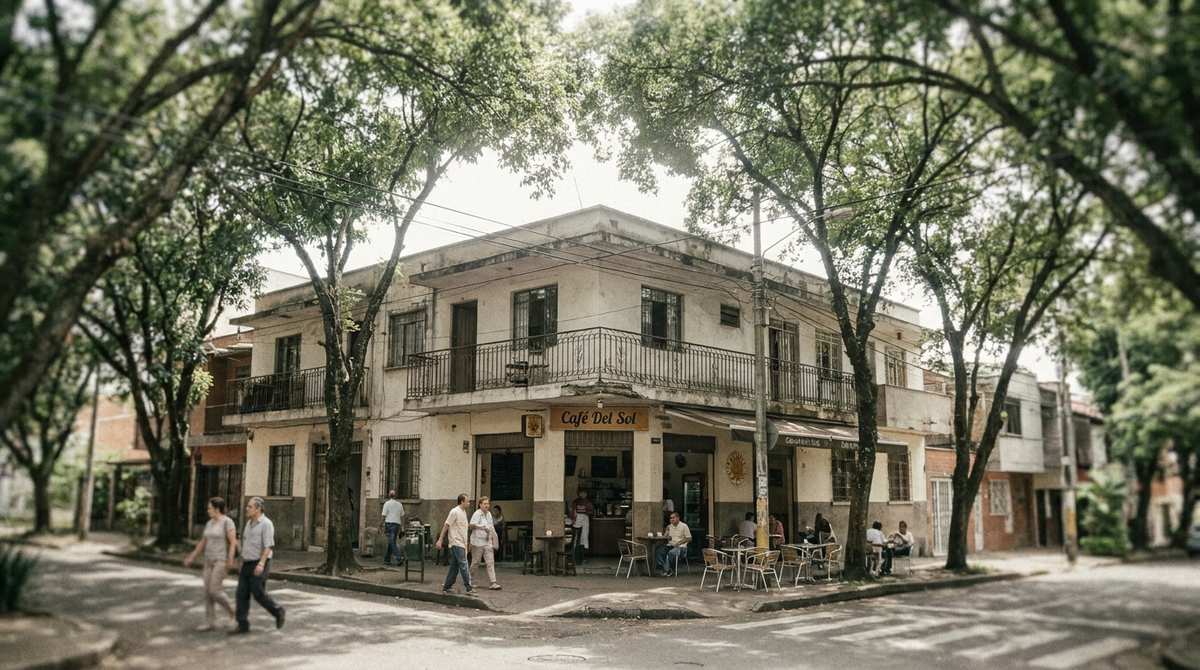
These two are the alternatives that come up most. Laureles is flatter, greener and more walkable than El Poblado, laid out in a grid and it reads as a genuine Medellín neighbourhood rather than an expat enclave. Envigado is technically its own municipality on the southern edge of the metro area, quieter and more residential, popular with people who want a calmer pace and better value. Both are the sensible middle ground: cheaper than El Poblado, closer to actual Colombian life, still well served by the metro. Belén and Bello are worth a mention as more local, lower-cost options further out, though with less English spoken and fewer of the conveniences newcomers lean on at first.
One caution runs through all of this. Character and safety vary street to street inside every one of these barrios, not just between them. Newcomers on forums often ask not which neighbourhood but which specific streets, precisely because a good block and a rough one can sit a few hundred metres apart. Treat any neighbourhood-level generalisation, the ones above included, as a starting point rather than a verdict. The only way to know a street is to walk it, at different times of day and ask people who live on it now.
Most newcomers rent and that is the sensible way to start while you learn the neighbourhoods. Enough longer-term expats end up buying instead that it is worth knowing the process exists — title checks, notary costs and financing for a foreign buyer are covered separately in Buying Property in Colombia.
Getting around
Medellín’s metro is a genuine point of difference. It is the only urban rail system in Colombia; no other city in the country has one. It opened in 1995 and now runs two rail lines, six Metrocable aerial cable-car lines that carry commuters up the steep valley sides to hillside neighbourhoods, a tram and connecting bus rapid-transit routes, all on one integrated fare. Fares are inexpensive by Western standards, though no longer literally pocket change: since January 2026 the standard Cívica-card fare is COP $3,820 and the cash/tourist fare COP $4,400, roughly US$1 to US$1.30 apiece at mid-2026 exchange rates (Metro de Medellín, 2026 fare schedule).
What people notice first is how clean and orderly it is and that is not an accident. The transit authority has run a civic programme called Cultura Metro since 1988, before the trains even opened, deliberately building a shared sense of ownership and courtesy among riders. The system is a source of civic pride and it shows.
The metro and cable cars cover a lot of the city; beyond that, walkability is decent in the flatter neighbourhoods like Laureles and patchier on the hills. Rideshare and taxis fill the gaps and are cheap by Western standards, though rideshare apps sit in a legal grey area in Colombia, so many residents use them alongside the official yellow taxis rather than instead of them.
Safety, straight
Medellín’s reputation is stuck in the late 1980s and early 1990s, the Escobar and cartel years, when it was one of the most violent cities on earth. In 1991 it recorded more than 6,800 homicides, a rate of about 416 per 100,000. That city no longer exists in the same form. Its own security secretariat reported around 300 homicides in 2024, a rate of about 11 per 100,000, described as the lowest in more than 80 years and making it, on that measure, the safest of Colombia’s large cities, below Bogotá, Cali, Cartagena and Barranquilla (figures reported December 2024). That is a fall of roughly 97 percent from the peak.
So the “it isn’t the 1990s any more” correction is true, but on its own it is not useful advice. A lower homicide rate does not tell you whether a particular street is a good place to walk at night and Medellín still has the everyday street crime of any large Latin American city. Current travel advice reflects both halves.
The United States rates Colombia overall as Level 3, “Reconsider Travel” (updated March 2026), but the areas it flags most strongly are rural border and conflict regions, not Medellín, which is not named as a restricted zone. The United Kingdom’s FCDO likewise treats Medellín’s main residential and tourist areas as ordinary travel, its “advise against” zones being specific rural and border departments (advice current mid-2026).
Both the U.S. State Department and UK FCDO advisories are candid about the actual risks for someone living in the city: pickpocketing, mugging and armed robbery in busy areas and a pattern of people being drugged and robbed after meeting someone through a dating app, often using scopolamine (locally, burundanga). That last one appears often enough in official warnings to take seriously rather than dismiss as scaremongering. What to do is unglamorous: check the current advisories yourself rather than a years-old blog, talk to people who live in the specific neighbourhood now and judge safety block by block instead of trusting a city-wide reputation in either direction. Conditions shift over time and over a few streets and no single number settles the question for you.
Who Medellín suits and who it doesn’t
It suits remote workers and retirees especially well: the cost of living is manageable, the climate is easy, the central-neighbourhood infrastructure works and there is a large enough foreign community that you are never the only newcomer. Younger expats in their thirties and forties sometimes note that the foreign population skews older and more retiree-heavy than expected and that daily life settles into routine fairly quickly once the novelty wears off. That is less a criticism than a reality check: after the adjustment period it stops feeling like an adventure and starts feeling like where you live, which for most people is the point.
It is a weaker fit in a few clear cases. Families needing English-language schooling will find options, but fewer and pricier than in a larger capital. Anyone who needs a substantial local job market rather than remote or retirement income will find Medellín thinner than Bogotá. And if you do not intend to learn any Spanish, you can get by in El Poblado but you will stay inside a bubble and pay for it. Whether Medellín is the right Colombian city for you sits in a fuller comparison in Best Place to Live in Colombia.
The limits of this guide
A guide like this can orient you, but it cannot stand in for your own look at the place. Much of the neighbourhood detail here is synthesised from the accounts of expats who live in Medellín, combined with official data and travel guidance. I have a second home in Colombia and have spent time in the city on visits, but that is not the same as decades of lived local knowledge and I would not pretend otherwise.
Two things date quickly: safety, which shifts at both the city and street level, so the figures above are snapshots rather than permanent facts; and neighbourhood character, which changes as areas gentrify or fall out of favour. Before you commit to a lease, verify current conditions for the specific streets you are considering, check the live advisories and talk to people living there now.
Frequently asked questions
Is Medellín safe to live in?
Far safer than its reputation suggests. Its homicide rate has fallen roughly 97 percent from the early-1990s peak and is now the lowest of Colombia’s large cities. It is not risk-free, though: everyday street crime, muggings and dating-app-facilitated drugging are the genuine concerns, not cartel violence. Safety varies street to street, so check current government advisories and look at the specific neighbourhood block by block rather than trusting a city-wide label.
What is the best neighbourhood in Medellín for expats?
El Poblado is the most popular and most convenient for English speakers, but also the priciest. Laureles and Envigado are the usual recommendations for people who want a calmer, more local and better-value base while staying well connected by metro. There is no single best answer; character and price vary street to street within each barrio, so the neighbourhood is a starting point and the specific block is the real decision.
How much does it cost to live in Medellín?
Less than most Western cities, which is a large part of the draw, though El Poblado has climbed enough that its rents can rival Bogotá. The full breakdown of rent, food, utilities, healthcare and a realistic monthly budget by neighbourhood is covered in Cost of Living in Medellín.
Why is Medellín called the city of eternal spring?
Because its altitude, around 1,495 metres in the Andes, keeps temperatures mild and steady all year despite its near-equatorial location. The annual average is about 23°C with little seasonal change, so it never gets properly hot or cold. It is a genuine geographic effect, not marketing. For the wider picture of moving to the country, see Moving to Colombia.
Sources
- Metro de Medellín, official history of the system: metrodemedellin.gov.co
- Metro de Medellín, on the Cultura Metro civic programme: metrodemedellin.gov.co
- ColombiaOne, on Medellín’s 2024 homicide rate, the lowest in 82 years, citing the city’s Security Secretariat: colombiaone.com
- U.S. Department of State, Colombia Travel Advisory: travel.state.gov
- UK Foreign, Commonwealth & Development Office, Colombia travel advice — safety and security: gov.uk
- Weather and Climate, Medellín average temperatures (1991–2020 normals): weather-and-climate.com
- Macrotrends, Medellín metro area and city-proper population: macrotrends.net
- Wikipedia, Medellín (elevation): en.wikipedia.org
- Alcaldía de Envigado, on Envigado’s status within the Área Metropolitana del Valle de Aburrá: envigado.gov.co
- Telemedellín, Metro de Medellín 2026 fare schedule (effective January 2026): telemedellin.tv
- Infobae, on Colombia’s Supreme Court ruling (SC370-2023) on Uber’s operating status: infobae.com
- El Colombiano, on Medellín’s 1991 homicide rate (about 416 per 100,000) compared with 2024: elcolombiano.com

