
Life in Ireland, as expat forums and relocation accounts describe it, tends to arrive as a set of small daily rhythms rather than the postcard version. An unpredictable sky that can turn over more than once before lunch. A conversation with a stranger at a bus stop that goes further than expected. A local pub that functions as much as the street’s news exchange as a drinking venue.
These are the small rhythms that recurring accounts say decide whether a move settles or frays, not the scenery.
The weather is the first adjustment when living in Ireland
Everyone tells you it rains. Fewer people explain the character of the rain, which is the part that is likely to wear on newcomers. It is rarely dramatic. It is constant, unpredictable and it shifts from a fine mist to a downpour and back inside an hour. Dublin, sitting on the drier eastern side, still logs somewhere around 128 to 151 wet days a year. Push out to the west coast and that climbs toward 225 wet days. You are not choosing between rain and no rain so much as choosing how much of it you want.
The temperatures themselves are mild on paper. Daytime summer highs typically run 17 to 20°C and winter days average 4 to 7°C, so nothing extreme in either direction. The catch is the dampness. A recurring theme in expat accounts is that Irish homes feel colder than the thermometer says as a product of older housing stock and heating that is expensive to run. People coming from drier or warmer climates describe a cold that gets into the building and stays, which is a different experience from a sharp continental winter that at least dries out.
The grey deserves a callout too. The HSE estimates that around 7% of people in Ireland experience Seasonal Affective Disorder and aggregated relocation accounts describe people moving from sunnier, more southern latitudes as reporting higher vulnerability to winter mood effects once the daylight shortens. I have not found a clinical study measuring that migration effect specifically, though I have experienced this winter mood change myself in New Zealand on particularly wet winters. If you are moving from somewhere with reliable sun, I would have a think about how this might affect your mental health and mood, knowing what to expect in advance will be half the defence.
The pub as social infrastructure and a dissenting view
Multiple independent accounts describe the Irish pub as a community institution rather than simply a bar. It is where live music happens, where matches are watched, where card games and quiz nights run and where a lot of the low-level social maintenance of a town gets done. For a newcomer that is useful, because it means there is an obvious, low-barrier place to be present without needing an invitation.
There is a counterpoint that deserves equal billing, because it comes from people who have lived there and pushes back on the warm-embrace framing. One detailed relocation account describes Irish socialising as heavily pub-centred precisely because home entertaining is comparatively rare and characterises locals as helpful but not especially outwardly warm or charismatic.
In that reading the pub is not just the heart of social life, it is close to the only room you will be invited into. Neither version is the settled truth. The likelier picture is that both are accurate depending on the person and the place and going in expecting the pub to carry most of your social weight is a more durable assumption than expecting a stream of dinner invitations.
Immediate friendliness, slow friendship
The consensus across most sources is that casual friendliness in Ireland is immediate and unforced. Strangers start conversations. Help gets offered before you ask for it. The surface layer of social life is, by most accounts, one of the easier ones in Europe to step into and newcomers routinely remark on how quickly a shop queue or a taxi ride becomes a chat.
The caveat repeats often enough to rule out simple cynicism. Deep friendship formation is described as slow. A large share of Irish social groups form in school and university years and stay intact well into adulthood, which means an newcomer can spend a long time on the friendly surface without moving into the inner ring.
Both things are true at once. You will feel welcomed almost immediately and you may still find that turning acquaintances into close friends takes years rather than months. The mistake to watch for is reading the early warmth as a promise of fast intimacy, then feeling let down when the second part turns out to be a longer project.
The GAA is a way in
If there is one reliable route past that surface layer, community accounts point to the Gaelic Athletic Association. GAA clubs function as far more than sports teams. They are gathering points for grief and celebration and the everyday business of a parish and they are used explicitly as an integration tool for newcomers. Reports of complete sporting novices playing within weeks of arriving are common and the club structure does a lot of the social introduction that would otherwise take an newcomer years to assemble alone.
The reach extends past Ireland itself. The GAA states that some 400 clubs promote its games outside Ireland, across the United States, Australia, Britain, Canada, China and mainland Europe, which means the diaspora carries a ready-made community with it and it also means the club culture is practised at connecting outsiders rather than closing ranks around locals. Of all the integration options I have seen described, joining a local club is the one that comes up most consistently as actually working and it does not require you to already be good at the game.
Food culture: an old reputation and a changed reality
Irish food carries a reputation for being limited and bland, built on the traditional staples of stew, colcannon, soda bread and bacon and cabbage. That reputation still circulates and if your only reference point is the old canon you would be forgiven for expecting little. It no longer matches the ground.
The improvement is documented rather than aspirational. Food trucks and markets in Dublin, Cork, Limerick and Galway now feature global cuisine, with strong Asian and Latin American showings and the gap between what you can eat in Dublin and what you can eat in a mid-sized town has narrowed considerably.
Long-term expats tend to frame this as a generational and perception shift rather than a purely logistical one. The food improved and the story people tell about Irish food simply lagged behind the change. If you are picturing a decade-old stereotype, my read is that you can retire it before you arrive.
Housing is the daily-life problem, not a background statistic
Nothing shapes the everyday experience of living in Ireland right now more than housing. This is not an abstract market story you can keep at arm’s length. It reaches into your commute, your household and your budget from the first month. Rental listings hit a record low in February 2026, fewer than 1,800 nationally, down around 22% year on year, which gives you a sense of how thin the supply has become.
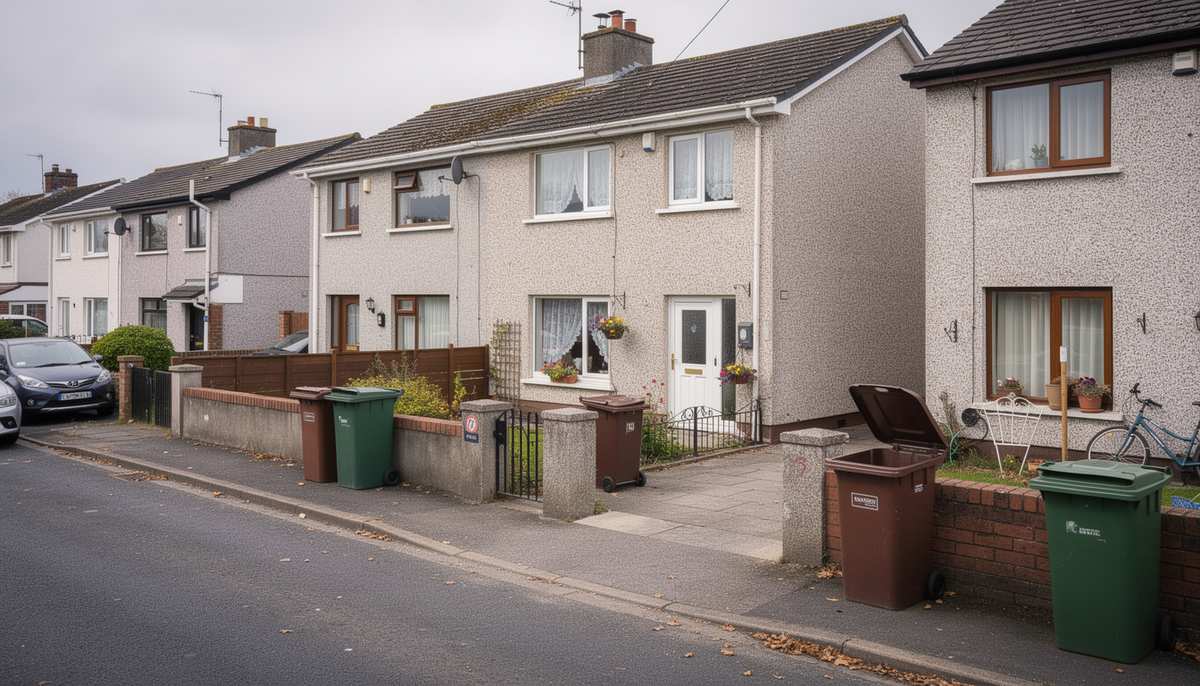
Dublin average rents run roughly €1,800 to €2,700 a month depending on area and how the figure is measured. The knock-on effects show up in how people actually live. Long commutes are normal. Adults stay in family homes for longer than they would choose to. Shared housing is common even among established working professionals; a room or small one-bed outside Dublin commonly runs €800 to €1,200 a month, with Dublin rooms priced well above that. Commuter towns such as Maynooth, Drogheda, Bray and Naas are used specifically to escape Dublin costs, at the price of a longer daily trip in and out.
This is a national story that presses on Irish nationals as hard as it presses on newcomers. A 20,000-person European survey by Opinium for RE/MAX found 33% of Irish people are considering moving to another country over affordability, the second-highest share in Europe after Malta, which tells you how heavy the pressure is, but it is not the same signal as settled expats regretting their move.
I’d lean toward keeping those two apart when you read the mood online. Locals weighing emigration over house prices and newcomers reflecting on how a move turned out are different conversations and conflating them will give you a gloomier reading than the evidence supports.
Dublin and the rest of the country are two decisions
Where you land inside Ireland changes the experience as much as the choice of Ireland itself. Rural areas offer a slower pace and tight-knit, welcoming communities and for the right person that is the whole appeal. The trade-offs are concrete. Transport and amenities are patchier, isolation is a serious prospect for someone used to a city and small-town hiring can lean toward locals first, which is a factor if your income depends on finding work on arrival rather than bringing it with you.
Dublin sits at the other pole. It carries the infrastructure, the jobs, an established expat community and a cosmopolitan feel that makes a soft landing easier for a newcomer. It also carries the highest costs in the country. Its public transport carries its own service gap. Dublin Bus, Luas and Irish Rail were hit with more than €17 million in penalties in 2024 for missing reliability and punctuality targets. Peak-hour overcrowding on the Luas is a recurring complaint in its own right.
My sense is that the choice comes down to what you can least afford to be without. If it is community depth and quiet, the country wins. If it is employment options and a shorter path into an existing expat network, Dublin earns its premium and you pay for it in rent.
The small culture shocks nobody warns you about
A few practical quirks come up in detailed relocation accounts often enough to flag, though these are best read as one thorough source rather than universal law. Eircodes, the Irish postcode system, are assigned per individual address rather than by area, which throws people used to area-based postcodes when a code identifies a single building instead of a district. In addition a drivers licence from the EU, EEA or a recognised state can be exchanged directly, but anyone staying more than 12 months on a licence from elsewhere must go through the full Irish learner process and driving test waiting times were averaging 12 weeks nationally in mid-2026, with some centres running well beyond six months, so it’d pay to start early rather than wait and be disappointed down the track.
- Outside the cities a car is close to essential, given how thin rural transport can be.
- Eircodes point to a building, not a neighbourhood, so an address lookup might behave differently from what you expect.
- Budget months, not weeks, for a driving licence unless yours qualifies for a straight exchange.
- Ireland is emphatically not the UK so don’t treating the two as interchangeable.
That last point is the one I would internalise before you land. It is a small courtesy that goes a long way and getting it wrong early is an easy way to start on the back foot with people who would otherwise be glad to have you.
Where this leaves you
Living in Ireland, on the aggregate of these accounts, is a warm and sociable experience with two persistent frictions attached. The weather and the light take some getting used to and the housing market shapes almost every practical decision you make once you arrive.
The social side is easier to enter than most and slower to deepen than you may expect and where you settle within the country matters as much as the decision to go. Go in with the stereotypes retired and the housing reality priced in and the rest of it, by most reports, is a place people are glad they moved to.
This article is part of our Ireland cluster, which covers the full move end to end.
Frequently asked questions
Is it hard to make friends in Ireland?
Casual friendliness is immediate by most accounts, with strangers happy to strike up conversation and help offered before you ask. Forming close friendships is slower, because many Irish social groups form in school and university years and stay intact. Both are true at once, so expect an easy welcome and a longer path to the inner circle. Joining a GAA club is the route people most often credit with speeding that second stage up.
How bad is the housing situation for newcomers?
It is the defining daily-life challenge at present. Rental listings hit a record low of fewer than 1,800 nationally in February 2026 and Dublin rents run roughly €1,800 to €2,700 a month. Shared housing is common even among working professionals and many people use commuter towns like Maynooth or Drogheda to escape Dublin costs. It affects locals as much as incomers, so read it as a national problem rather than a newcomer-specific one.
Does the weather really affect people that much?
For some relocating expats, yes. The rain is constant and the damp cold gets into older homes, but the bigger variable is the short, grey winter light. The HSE estimates around 7% of people in Ireland experience Seasonal Affective Disorder and aggregated relocation accounts describe people moving from sunnier or more southern climates as reporting higher vulnerability to winter mood effects. If you are coming from reliable sun, plan for it as a health factor in advance.
Do I need a car in Ireland?
In Dublin and the larger cities you can manage without one, though public transport draws frequent criticism for not meeting it’s service levels. Outside the cities a car is close to essential, since rural transport and amenities are patchier. A licence from the EU, EEA or a recognised state can be exchanged directly, but anyone on a licence from elsewhere staying more than 12 months must sit the full Irish driving test and waiting times were averaging 12 weeks nationally in mid-2026, well over six months at the busiest centres, so start the process early rather than assuming a quick swap on arrival.
Sources
- Irish Times, Penalties of more than €17m imposed on bus, rail, Luas operators for missing performance targets
- World Property Journal, coverage of the Daft.ie Rental Report, Q1 2026
- Wikipedia, Climate of Ireland
- Ireland.ie, What is the GAA
- Fortune, Ireland’s housing crisis forces a third of residents to consider leaving
- Irish Times, The Housing Crisis and Me
- GAA.ie, About the GAA (worldwide club numbers)
- Irish Times, Could your low mood be seasonal affective disorder?
- Eircode.ie, What is Eircode
- Citizens Information, Exchanging a foreign driving licence
- Irish Times, Raheny has longest driving test waiting time

